
Mini-Splits vs. Central AC: A Complete Comparison

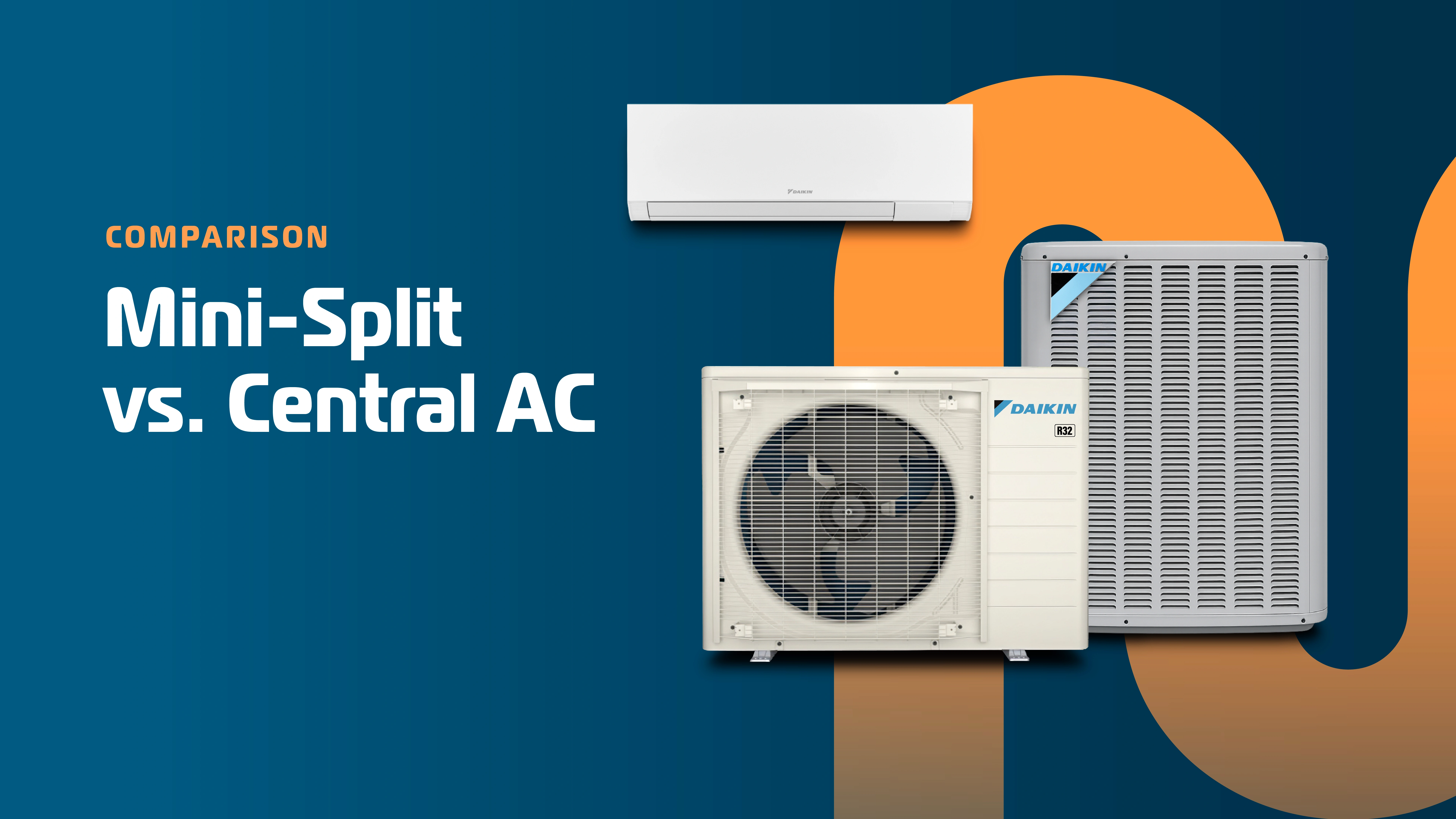
Mini-splits and central AC can both keep your home comfortable, but they do it in very different ways. Mini-splits offer flexible, room-by-room control without traditional ductwork, while central AC uses ducts to provide consistent cooling throughout the home.
So, how do they compare? Here’s what homeowners should consider before choosing between the two.
Mini-Split vs. Central AC: Quick Comparison
The biggest difference between a mini-split and central AC is how conditioned air is distributed. Mini-splits deliver air directly into individual rooms or zones, while central AC distributes cooled air throughout the home using ductwork.
Here’s a quick comparison:
How Mini-Splits Work
A ductless mini-split typically consists of an outdoor unit connected to one or more indoor air-handling units.
Instead of pushing air through ducts, each indoor unit delivers conditioned air directly into the room or zone where it is installed.
This allows different parts of the home to have their own temperature settings.
Mini-splits are commonly used for:
- Homes without existing ductwork
- Home additions
- Finished garages
- Bonus rooms
- Sunrooms
- Home offices
- Upstairs bedrooms
- Rooms that stay hotter or colder than the rest of the house
Multiple indoor units can also work with one outdoor system to create several comfort zones throughout a home.
For a more detailed explanation, read Mechollage's guide on how mini-split systems work.
How Central AC Works
Central air conditioning uses one central cooling system and a network of ducts to distribute conditioned air throughout the home.
Air travels through supply ducts into different rooms before returning to the system through return ducts to continue the cooling cycle.
For homes that already have properly designed ductwork, central AC provides a straightforward way to cool multiple rooms from one system.
If your current system is aging or no longer keeping up, Mechollage also provides professional AC installation and replacement.
Mini-Splits vs. Central AC: Key Differences
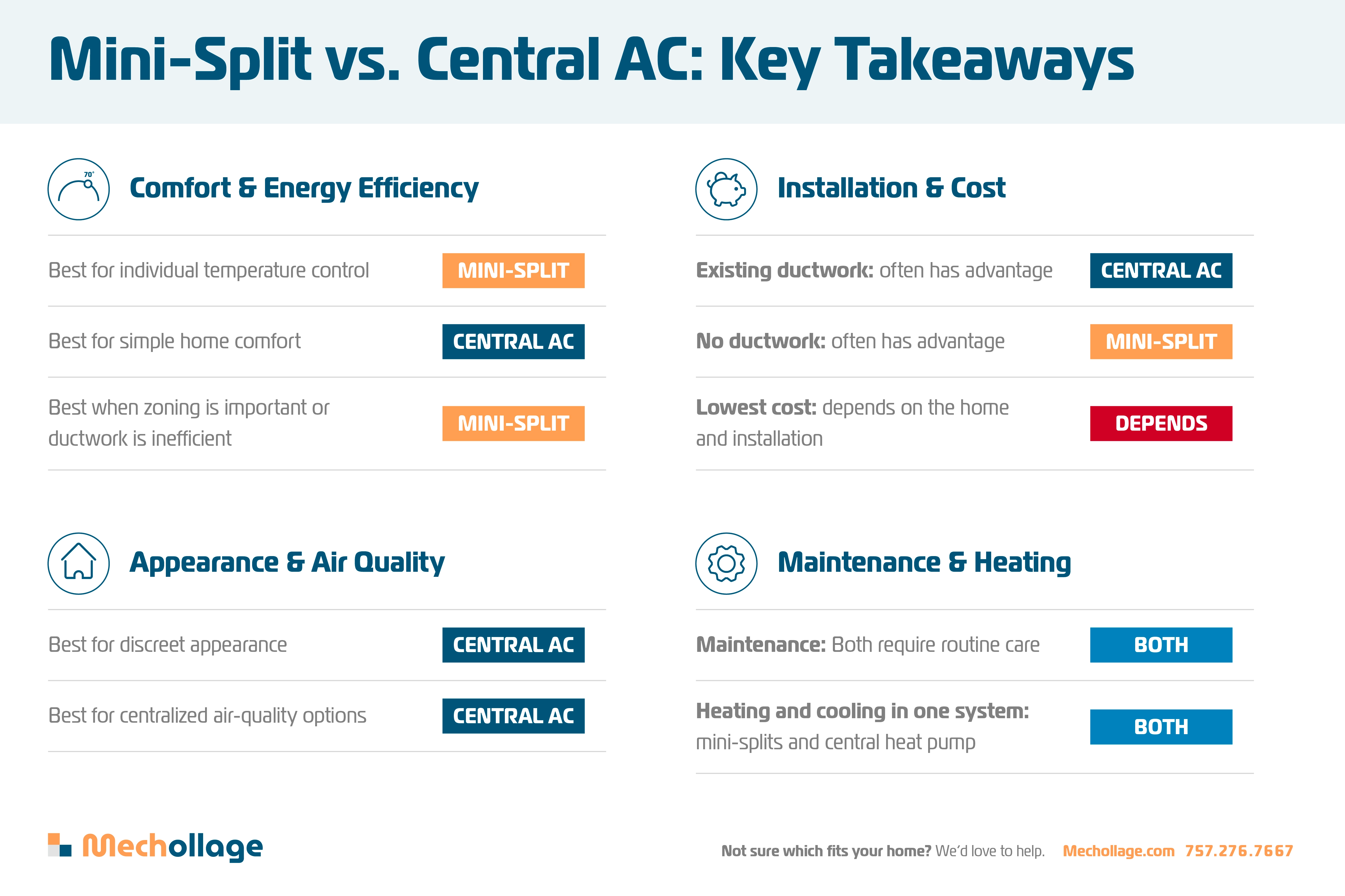
Beyond the basic differences in how they cool your home, mini-splits and central AC vary in comfort control, efficiency, installation, cost, and long-term maintenance.
Comfort & Energy Efficiency
Mini-splits provide individual temperature control for different rooms or zones, making them useful for homes with hot or cold spots or different comfort preferences. Because they don't rely on traditional ductwork, they also avoid energy losses that can occur through leaking or poorly insulated ducts.
Central AC typically provides more consistent whole-home cooling from one thermostat. Modern systems can also be highly efficient when properly sized and paired with well-designed, sealed ductwork.
Installation & Cost
If your home already has good ductwork, installing or replacing central AC is often the more straightforward option.
Without existing ducts, central AC may require additional construction to route ductwork through walls, ceilings, attics, or crawl spaces. A ductless mini-split avoids that requirement, making it especially useful for older homes, renovations, additions, and converted spaces.
Cost also depends on the home. Mini-split pricing can increase as more indoor zones are added, while central AC costs can rise if ductwork needs to be installed or repaired.
If you’re planning an HVAC upgrade, explore Mechollage’s financing options.
Appearance & Indoor Air Quality
Mini-splits require an indoor unit in each conditioned zone, so some equipment remains visible inside the home. Central AC keeps most equipment out of sight, with primarily vents, returns, and a thermostat visible.
The systems also handle filtration differently. Mini-splits filter air through each indoor unit, while central HVAC systems can make it easier to integrate whole-home filtration and other indoor air quality solutions.
Maintenance & Heating
Both systems need regular maintenance. Mini-splits have filters and coils at each indoor unit, while central AC uses centralized equipment and also relies on the condition of the home's ductwork.
Professional AC maintenance can help keep either type of system operating properly.
There is also an important difference when it comes to heating. Many mini-splits are heat pumps and can provide both heating and cooling. Traditional central AC only provides cooling and is typically paired with a furnace or another heating system. A central heat pump can also provide both heating and cooling through ductwork.
Can You Use a Mini-Split and Central AC Together?
Yes. In some homes, using both can be the most practical solution.
For example, suppose your central AC comfortably cools most of your house, but your:
- Finished garage
- New addition
- Upstairs bedroom
- Sunroom
- Home office
- Bonus room
never stays comfortable.
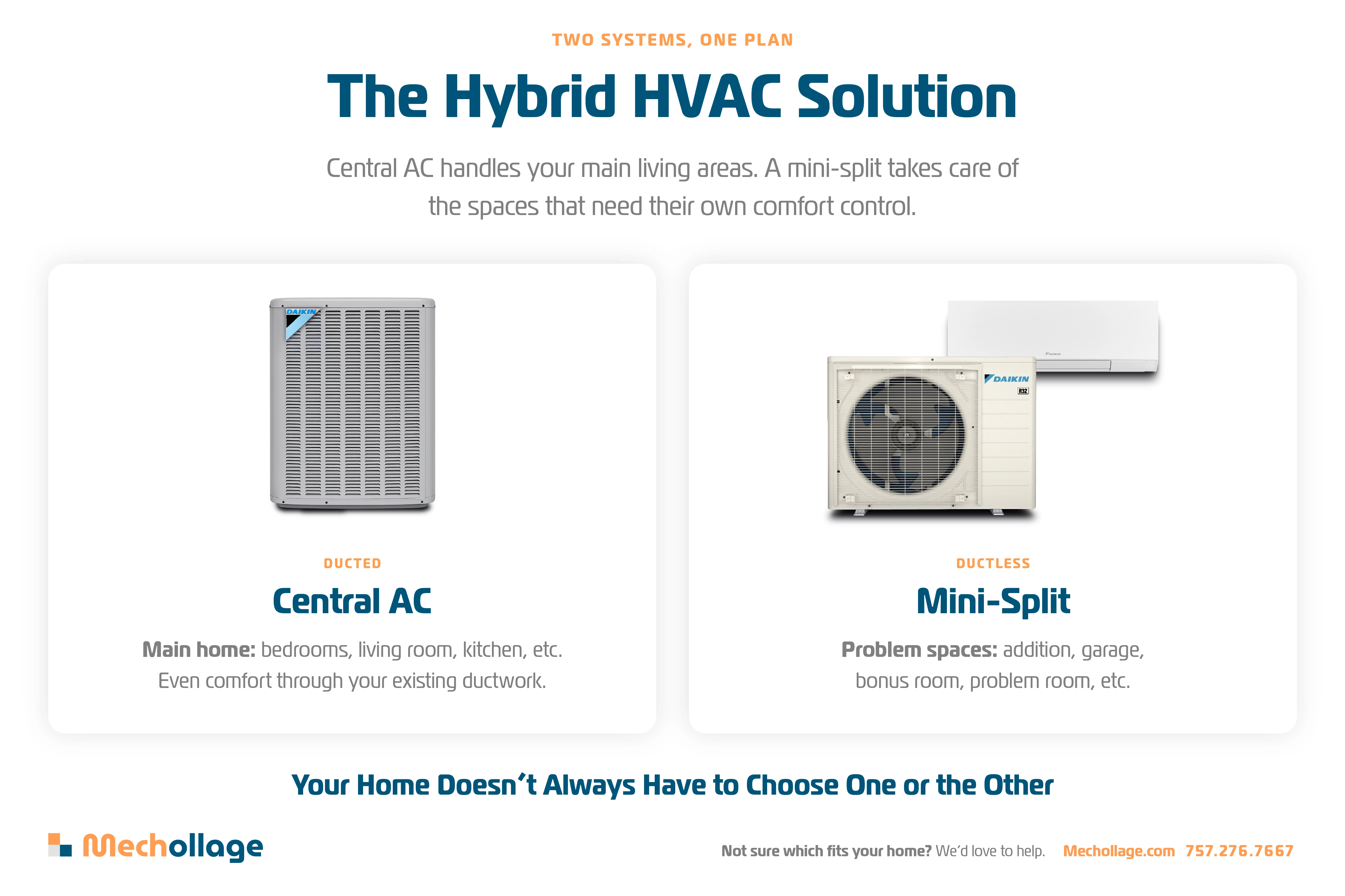
Instead of replacing or redesigning the entire central HVAC system, a mini-split can provide dedicated heating and cooling for that specific area.
This approach allows your central AC to continue serving the main house while the mini-split handles the room that needs additional temperature control.
Mini-Split vs. Central AC: Which One Should You Choose?
After comparing both systems, the right choice usually comes down to your ductwork, home layout, comfort needs, and how much temperature control you want.
Find the Right Cooling System With Mechollage
There’s no one-size-fits-all winner. Mini-splits are ideal for zoning, flexible installation, and homes without ductwork, while central AC is a strong fit for consistent whole-home cooling and homes with existing ducts.
The right choice depends on your home’s layout, ductwork, comfort needs, and budget.
Whether you’re considering a ductless mini-split, central AC, or a heat pump, Mechollage can help you compare your options and find the best fit for your home.
Contact Mechollage to get started.
Mini-Split vs. Central AC FAQs
Are Mini-Splits More Efficient Than Central AC?
Mini-splits can be highly efficient because they avoid duct losses and allow room-by-room temperature control. Central AC can also be efficient when paired with properly designed and sealed ductwork.
Can a Mini-Split Cool an Entire House?
Yes. A properly sized multi-zone mini-split system can cool several rooms or an entire home, depending on the layout and system capacity.
Is Central AC Better for Larger Homes?
Central AC is often a practical choice for larger homes that already have ductwork and need consistent cooling throughout the entire house.
Do Mini-Splits Need Ductwork?
No. Mini-splits are ductless, making them a great option for older homes, additions, garages, bonus rooms, and other spaces without existing ducts.
Can I Use a Mini-Split and Central AC Together?
Yes. Central AC can cool the main home while a mini-split provides extra temperature control for an addition, upstairs room, garage, or other problem area.
Do Mini-Splits Provide Heating Too?
Many mini-splits are heat pumps, which means they can provide both heating and cooling. Central AC provides cooling only unless it is paired with a furnace or replaced by a central heat pump.
Which Costs More: Mini-Splits or Central AC?
It depends on your home. Central AC may be more cost-effective when good ductwork already exists, while mini-splits may make more sense when adding ductwork would be expensive or disruptive.
How Do I Know Which System Is Right for My Home?
Consider your existing ductwork, home layout, number of rooms, comfort preferences, and budget. Mechollage can help evaluate your home and recommend the system that best fits your needs.